2026 AI Cost Strategy: Meta Compute Bare-Metal vs. Mac mini ROI
The Great Compute Pivot: Why Meta is Becoming Your Landlord
On July 1, 2026, Bloomberg reported a seismic shift in the AI landscape: Meta is launching "Meta Compute," a dedicated cloud business to sell its surplus AI processing power. Following the news, Meta’s stock surged nearly 10%. Mark Zuckerberg’s logic is simple—with AI capital expenditure hitting a staggering $125 billion to $145 billion, the company has built a "compute fortress." When you have more H100s than you can use on a Tuesday, renting them out isn't just a side hustle; it's a financial necessity.
For the individual developer, this creates a dilemma. In a world where Meta offers both Model-as-a-Service (MaaS) (access to Muse Spark) and Bare-metal infrastructure, the "compute rent" is now a standard line item in every startup's budget. But before you connect your credit card to Meta’s billing engine, you need to ask: are you building equity in your hardware, or just paying off Zuckerberg’s GPUs?
The Hidden Costs of the "Compute Rent" Trap
Transitioning to cloud-only AI development in 2026 comes with structural risks that many developers overlook until the first multi-thousand-dollar invoice arrives:
- The "Idle Tax": Cloud bare-metal instances are billed by the hour. If your debugging process takes four hours while the instance is live, you are paying premium H100 rates for a text editor to sit open.
- Data Egress & Latency: Moving TBs of training data into Meta’s environment and pulling results out often incurs "hidden" costs that can exceed the base compute rate.
- Variable Pricing Volatility: As seen in the recent stock dip of providers like CoreWeave, the entry of giants like Meta can cause massive fluctuations in rental spot prices, making long-term budgeting impossible.
Decision Matrix: Meta Compute vs. Local Mac mini
For local development, the Mac mini M4 (and its Pro/Max variants) has become the "Swiss Army Knife" of AI. Here is how the 2026 economics stack up.
| Feature | Meta Bare-Metal (H100/B200) | Mac mini (Apple Silicon) |
|---|---|---|
| Upfront Cost | $0 (Subscription/Hourly) | $599 - $2,500 (One-time) |
| Best For | Large-scale training/Fine-tuning | Local inference, RAG, Web Dev |
| Privacy | Cloud-governed | 100% Local / Air-gapped |
| Energy Impact | High Carbon Footprint | < 100W (Ultra-efficient) |
| Asset Value | Expense (Tax write-off only) | Capital Asset (Resale value) |
Deploying Your Local "Mini Compute" Node
If you decide to hedge against rising cloud costs, building a local node with a Mac mini is the most efficient move in 2026. Follow these steps to optimize your setup:
- Specify for Unified Memory: AI tasks are memory-bound. Prioritize 64GB or 128GB of RAM over SSD space; Apple's unified memory allows the GPU to access the entire pool for large model weights.
- Containerize with MLX: Utilize Apple’s MLX framework. It is specifically optimized for Apple Silicon to ensure your local inference speeds rival mid-range cloud GPUs.
- Setup a Remote Build Pipeline: Use the Mac mini as a "local-remote" server. Code on your MacBook, but trigger heavy inference or testing tasks on the docked Mac mini via SSH or VS Code Remote.
- Implement Hybrid Bursts: Use local hardware for 90% of development and debugging. Only trigger Meta Compute APIs when you need to scale to thousands of concurrent users or perform a final full-parameter fine-tune.
- Automate Off-Peak Tasks: Set up local CRON jobs to run batch processing or embedding updates overnight, utilizing the Mac mini’s near-silent, low-heat operation.
Hardware Data Points to Consider
To make an informed decision, keep these 2026 benchmarks in mind: * Energy Efficiency: A Mac mini M4 Pro consumes roughly 0.5 kWh per day running continuous inference, whereas a single H100 node can consume over 15 kWh per day in a data center environment. * Inference Speed: On 7B - 30B parameter models (optimized for 4-bit quantization), the M4 Pro achieves 30+ tokens per second, exceeding the reading speed of most humans. * Breakeven Point: At current Meta Compute projected rates ($2-$4/hour for high-end bare metal), a $1,500 Mac mini pays for itself in just 500 to 750 hours of active use.
The Strategy: Don't Be a "Compute Tenant"
While Meta’s entry into the cloud space provides incredible scale, relying solely on cloud rentals is a recipe for "digital poverty." You are essentially renting someone else's tools to build your house. The most successful developers in 2026 are those who own their primary "industrial equipment"—a high-spec Mac mini or Mac Studio—and only "lease" the heavy machinery of Meta Compute for the final push.
Current cloud-only configurations suffer from high latency, unpredictable monthly billing, and the constant threat of platform lock-in. Instead of being at the mercy of Meta’s "overrun" capacity, investing in localized Apple Silicon provides a predictable, high-performance foundation. For those seeking the ultimate balance of power and flexibility without the hardware maintenance headache, renting a dedicated Mac server offers the privacy and fixed-cost benefits of local hardware with the accessibility of the cloud. It is the professional path to skipping the "compute rent" trap.
FAQ
Related Reading
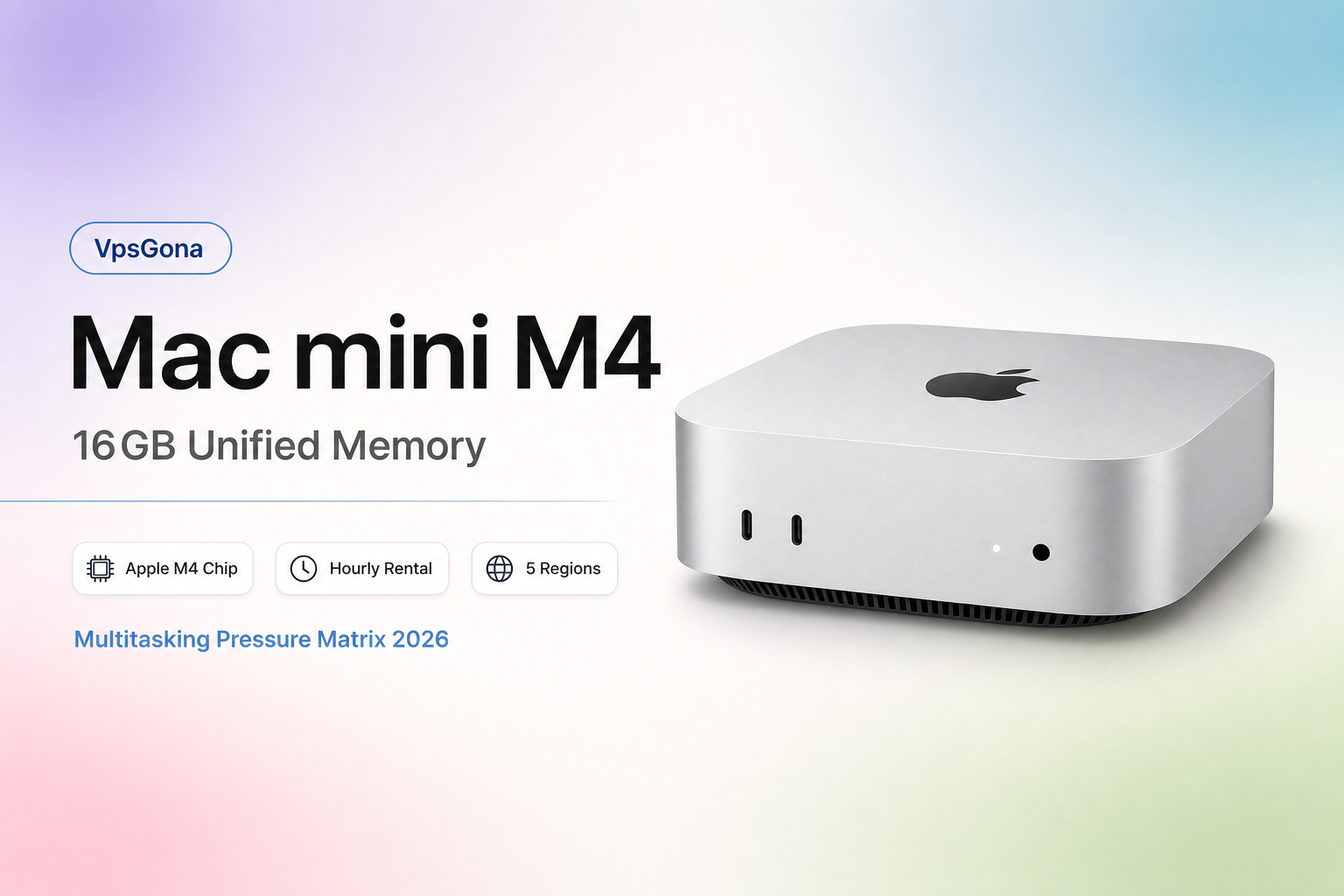
Choose Mac Mini M4 Cloud for Scalable Local-Model Development
Access dedicated Mac mini M4 hardware with 10-core CPU and 16GB Unified Memory for high-efficiency local inference.
Enjoy the flexibility of daily billing starting at $20.8, ideal for dev-testing without the long-term cost of H100 rentals.