2026 Guide: How to Learn iOS Development Without a Mac (Beginner Friendly)
Can You Really Learn iOS Development Without a Mac?
The short answer is: You need macOS, but you don't necessarily need to buy a MacBook.
As we move into 2026, Apple’s ecosystem remains strictly closed. To compile Swift code, design interfaces with SwiftUI, and submit apps to the App Store, the Xcode IDE is mandatory. Xcode only runs on macOS. For students or beginners on a budget, spending $1,000+ on a MacBook Pro just to see if you like coding is a massive financial risk. Fortunately, modern technology offers several "bridge" solutions that allow you to write iOS apps while keeping your current Windows laptop.
2026 Comparison: How to Run Xcode on Windows
In 2026, the landscape for non-Mac users has shifted. Apple Silicon (M1/M2/M3/M4) has made older Intel-based workarounds much slower. Here is how the current options stack up:
| Solution | Performance | Ease of Setup | Stability | 2026 Recommendation |
|---|---|---|---|---|
| Virtual Machine (VMware) | Very Low | Difficult | Poor (Crashes) | Not Recommended |
| Hackintosh | Moderate | Expert Only | Unstable | Not Recommended |
| Cross-Platform (Flutter) | High | Easy | Stable | Good for Logic only |
| Remote Mac Rental | Native High | Instant | Excellent | Best for Students |
The Hidden Costs and Pain Points of "DIY" Solutions
Many beginners try the "free" route first, only to hit these frustrating roadblocks:
- Hardware Incompatibility: Hackintosh setups often fail to support Wi-Fi cards or sound on modern laptops, and Apple is phasing out support for Intel chips entirely.
- The "Lag" Factor: Virtual machines do not support 3D acceleration well. Dragging elements in Xcode's "Canvas" view becomes a stuttering nightmare.
- Update Bricking: Every time Apple updates macOS or Xcode, a DIY setup or VM is likely to break, requiring hours of troubleshooting instead of coding.
- Security Risks: Downloading "pre-cracked" macOS ISOs for VMs puts your personal data and Apple ID at risk of malware.
Why Remote Mac Rental is the Smart Move for 2026
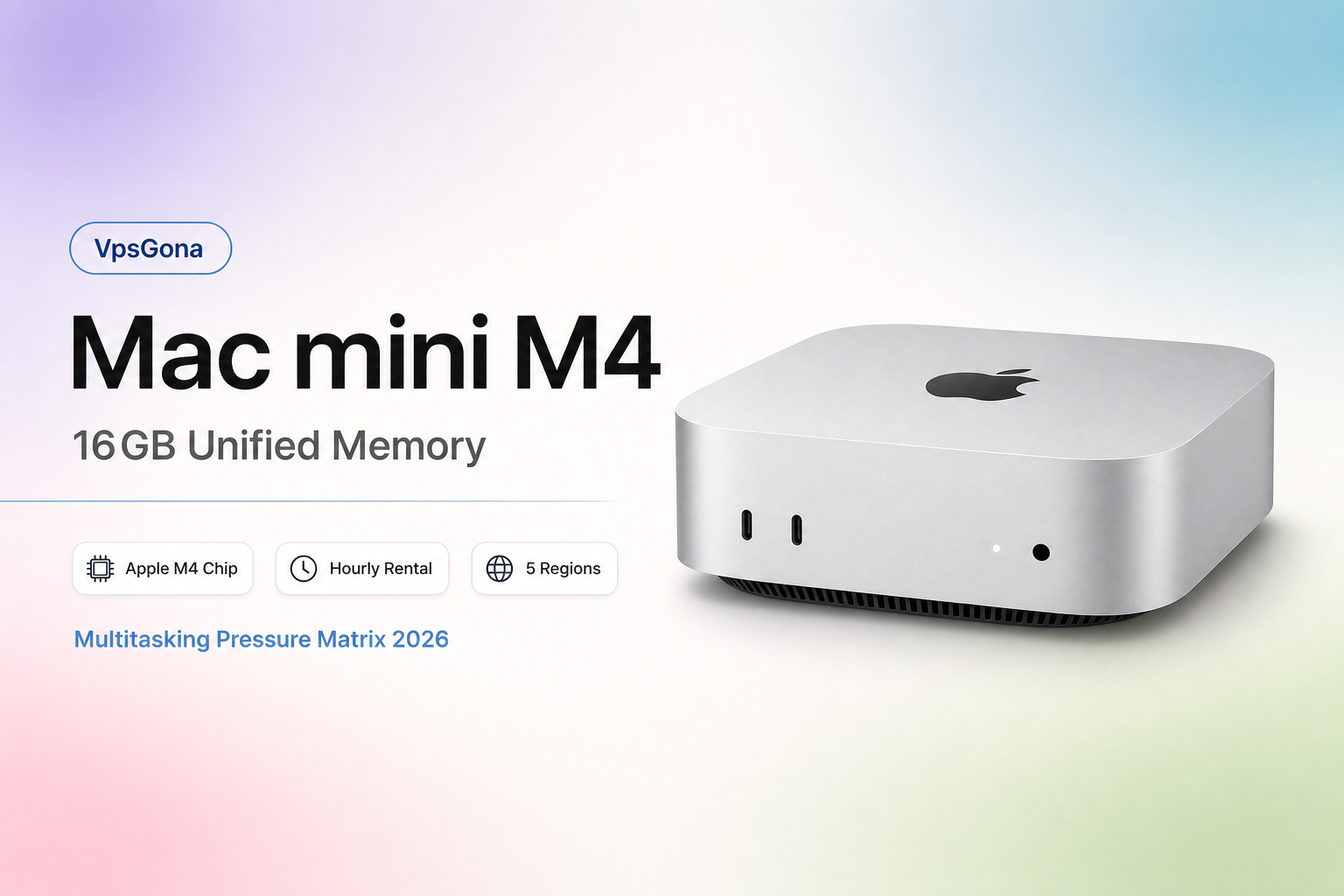
For a student today, Remote Mac Rental has become the gold standard for learning. Instead of fighting with software, you connect to a real, physical Mac mini or Mac Studio located in a professional data center.
- Native Apple Silicon Power: You get the speed of M2 or M3 chips, which is essential for 2026 AI-assisted coding features in Xcode.
- Root Access: You can install Homebrew, CocoaPods, and any SDKs you need.
- No Hardware Commitment: Learn for a month for the price of a few cups of coffee. If you decide coding isn't for you, you haven't wasted $1,500.
- Accessible Everywhere: Use your Windows desktop at home or an iPad in a coffee shop to continue your Swift tutorial.
5 Steps to Start iOS Development on Windows Today
If you want to write your first "Hello World" in the next 10 minutes, follow this workflow:
- Select a Plan: Choose a remote Mac rental service that offers macOS 15 (Sequoia) or newer to ensure Xcode 16+ compatibility.
- Connect via RDP/VNC: Use the built-in "Remote Desktop Connection" on Windows to log into your Mac.
- Sign in with Apple ID: Open Xcode and sign in to access developer documentation and simulators.
- Create a New Project: Select "iOS" -> "App" and choose SwiftUI for the modern development experience.
- Hit the Play Button: Run your app in the Simulator. You are now officially an iOS developer, all from your Windows machine.
Vital Stats for the 2026 Developer
- Xcode Storage Requirement: A clean install of Xcode 16 plus simulators requires at least 40GB of free space—hard to manage on a small VM.
- RAM Benchmarks: For a smooth experience in 2026, macOS requires a minimum of 8GB RAM (16GB preferred). Most VMs take 50% of your system RAM, slowing down your Windows host.
- Cost Efficiency: A high-end Mac rental costs roughly $5-$10 per week, compared to a $1,200 upfront cost for hardware—offering a 99% reduction in entry cost for students.
Your Path to the App Store Starts Here
Choosing the right environment is the difference between enjoying code and quitting out of frustration. While Windows is great for gaming and web development, trying to force it to act like a Mac using buggy virtual machines is a "productivity killer" that wastes your most valuable asset: time.
Current "workarounds" like Hackintosh are dying as Apple completes its transition to ARM-based chips. If you are serious about learning Swift and building a portfolio that gets you hired, you need a stable, high-performance macOS environment. Renting a professional Remote Mac provides the same 1:1 experience as owning a MacBook Pro for a fraction of the cost. Skip the installation headaches and start building your first iPhone app today.
FAQ
Related Reading
Start Your iOS Development Journey in 5 Minutes
Access a dedicated Mac mini M4 with the latest macOS environment through any web browser on your Windows PC.
Run Xcode and iOS Simulator at full speed on real Apple Silicon hardware without the overhead of virtualization.